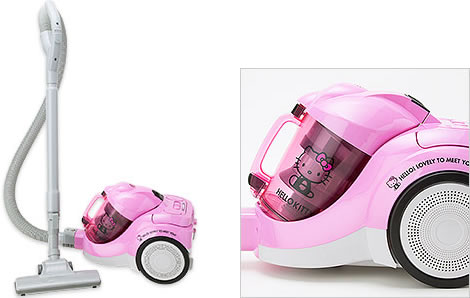
Vacuum Cleaners The History

February 8, 2011
The first person to patent a machine for cleaning was David Hess in the year 1860. Housewives all over America had turned to using rugs and carpets, a trait brought over by the waves of immigrants coming from Europe, to cover their bare wood floors and keep the dust and dirt to a minimum. When they were dirty, they had to be carried outside, suspended somehow in the air and then beaten with a metal rod or heavy wooden stick.


A bit later someone invented a small, tennis racket-looking device called a rug beater for precisely this purpose. Mr. Hess soon realized that there was probably an easier way to clean rugs without all the fuss and mess and he invented the Carpet Sweeper which had a rotating brush combined with a bellows system that created suction. His amazing invention also used two water chambers to trap the dust and fine dirt. The only problem with Mr. Hess’ machine is that there is no proof it was ever produced.

After Mr. Hess’ invention, there came a period of wilder and weirder inventions that sought to accomplish the same thing. In the late 1870’s, Melville Bissell (sound familiar?) marketed a carpet sweeper that picked up the dirt and dropped it into a pan behind the rotating brush. In 1899, John Thurman invented a gasoline-powered vacuum cleaner that is credited as being the first motorized version. In 1901 Hubert Booth of London invented the electric vacuum, a device so large that it was parked outside the house and a 100-foot long hose snaked its way inside and did the dirty work.

The device was so popular that housewives all over London held vacuum parties to enjoy the event. It wasn’t until 1908 when James Spangler, a janitor in Ohio, invented the first portable, suction cleaner -- the precursor to today’s high tech machines. He sold his patent to his cousin’s husband, William Hoover (also familiar?) and the rest, as they say is history.

Scooters The History

Scooters were first known as a child's vehicle that dates back to before 1920. Although scooters were being manufactured, the majority of older children fashioned their own out of miscellaneous used parts. Remember the Little Rascal movies with scooters made out of produce crates? Technology and economies have changed since that time, allowing for today's mass produced scooters to offer a variety models and to be sold at a reasonably low cost.


Modern scooters not only include the push scooters that require a little bit of exercise, but also feature electric and gas motorized models. Advancements in technology have made way for many physically impaired individuals to replace wheel chairs with motorized scooters and mobility scooters. Competition among scooter manufacturers has led to unique design features as well as miniature low-powered motorcycles.

Motorized scooters are considered low-power motor vehicles by many municipalities and are subject to state and local regulations. Some scooters meet Department of Transportation regulations for operation on streets and roadways while others are prohibited from being on the streets. Any time a motorized vehicle is introduced into traffic areas, appropriate cautionary measures must be taken and proper safety gear must be worn.

Scooters can be easily found in the retail market, however not all retailers will carry all styles. Major discount or department stores may only carry a couple of models that they believe will be the most popular among their shoppers. A scooter store could specialize in a variety of recreational scooters, while another store will specialize in the mobility scooters. Retailers also offer scooter accessories to enhance the experience as well as replacement parts and service. Any style of scooter can be purchased online for retail pricing.

The current market demand for scooters makes it hard to find them at wholesale prices for a single purchase, but there are many opportunities for an individual to become a scooter dealer.

Benefits of Sauna

Saunas cleanse and rejuvenate skin. A radiant and pink skin become a reality. Mental and physical relaxation is also a major benefit of sauna use. In addition, saunas relax sore muscles and help in relieving stress and tension. The sauna also improves one's immune system, metabolic rate and circulation. Arthritis patients can benefit temporarily by taking sauna baths.


During a sauna bath, natural chemicals (Norepinephrines and Beta Endorphins) are released to relieve pain. Saunas help in burning sizeable amounts of calories. Also, the combination of low humidity and high temperature helps in cleansing ones pores thoroughly by increasing perspiration.

Infrared saunas are helpful in treating diabetes, hypertension, metal implants, and varicose veins. The patients of bronchial asthma, bronchitis, cough, catarrh of upper respiratory channels, and joints problems benefit from steam saunas.

Saunas create a condition of fever, which activates all organs of the body. It is a cure for headaches and common cold. Saunas promote sweating. Sweating is as essential as breathing and eating. Sweating cleanses, removes body waste and regulates body temperature. Sweating is very limited or non-existent in many as they live a sedentary life.

In summary, saunas have numerous health benefits. However, there are health risks of using saunas for some individuals so caution must be exercised.

Pepper Spray

Pepper spray is far better than tear gas or mace. First of all, they are more likely to stop an assailant. Tear gas and mace generally work on the pain principle, but that’s sometimes not enough for an assailant who is psychotic, under the influence of certain drugs or alcohol, or just plain immune to pain. Pepper spray, on the other hand, works to physically incapacitate the assailant, regardless of pain threshold.


The active ingredient is pepper spray is oleoresin capsicum, a chemical harvested or derived from cayenne peppers. This ingredient, briefly referred to as OC, is mixed with a carrier and a propellant in a can with a spray nozzle. When the mixture is sprayed into an assailant’s face, the OC affects the eyes, throat, nose, and lungs. The capillaries in the eyes instantly dilate, causing the eyelids to slam shut. The bronchial tubes swell tightly, making it hard for the attacker to breathe. The effects last a few minutes to 45 minutes, depending on the concentration of OC – long enough for the would-be victim to get away and call the police.

Law enforcement officers have been using pepper spray for decades. It has proven effective in subduing people and controlling crowds. It has also decreased the total number of cases of officer injury. Its effectiveness prompted manufacturers to offer the weapon to the general public. Now pepper spray is available in many mixes and formats, from large cans of mace, to small canisters that can fit on a key chain.

Used in conjunction with street smarts and hand-to-hand self-defense classes, pepper spray can be a highly effective tool for staying safe and sound.

Glow Sticks Working

With no bulb or battery, glow sticks manage to give off a strong light. So how exactly do glow sticks work? Glow stick light is the result of a chemical reaction. Most glow sticks hold a hydrogen peroxide solution and a solution containing phenyl oxalate ester and a fluorescent dye.

When the two compounds are mixed, the hydrogen peroxide oxidizes the phenyl oxalate ester, resulting in a chemical called phenol and an unstable acid ester. The unstable compound decomposes, resulting in additional phenol and a cyclic peroxy compound. The cyclic peroxy compound then decomposes to carbon dioxide; this decomposition process releases energy to the dye, and the electrons in the dye atoms jump to a higher level, then fall back down, releasing energy in the form of light.


The actual light stick is simply a form of housing the two solutions. In the stick, the two solutions are kept in separate chambers. The phenyl oxalate ester and dye solution fills most of the glow stick, while the hydrogen peroxide solution is held in a smaller glass vial within the middle of the stick. This is why glow sticks must be bent to activate - bending the plastic stick breaks the glass vial open, allowing the two solutions to mix.

The glow stick can stay lit for hours, if enough compounds are used. However, more commercial glow sticks are likely to last up to 30 minutes. Also, heating the glow stick will cause it to glow brighter, but it will also dim more quickly. Similarly, cooling the stick will slow down the process and cause a dimmer light to last much longer. Freezing a glow stick can cause the light to last for several days, though it will eventually fade out.

Although some websites offer information on how to make a glow stick, this is discouraged unless a person has a background in science and considerable training in chemical compounds. While relatively safe, mixing the compounds incorrectly can lead to inadvertent results, and the dye can harm clothing and other fabrics.

Dolphin is Your Friend for Swimming

Several sites in the Bahamas offer swim-with-dolphins experiences at reasonable cost and for varying swimming abilities.


You don’t have to be an excellent swimmer to have close and intimate encounters with dolphins in the Bahamas. You can meet up with dolphins in shallow waters on the Blue Lagoon Island, just 20 minutes from Paradise Island, Nassau.

Those ready to swim with the dolphins can do so in specially created enclosures by private operators.

Bimini is the closest Bahamian island to the U.S, only 48 miles east of Miami and a short 25-minute flight. Alice Town is the commercial center of Bimini. It consists of a single quiet road called the King's Highway.

Bimini is known for its spotted dolphins. Half-day trips are offered by Bimini Undersea to seek out the spotted dolphins, which frequent the waters around Bimini.

Atlantic Spotted Dolphins are fun loving, intelligent, friendly, and playful. The wild spotted dolphin of Little Bahama Bank like to swim side by side with humans.

Dolphins prefer that you swim with your arms down at your sides and not reaching out for them. The wild spotted dolphins come to play with you of their own free will.

Your encounter with dolphins can last from a few minutes to several hours each. The relationship is voluntary based on trust, play, and curiosity. Very active snorkeling and free diving are good ways to keep their attention.

image source
 
Get paid To Promote at any Location